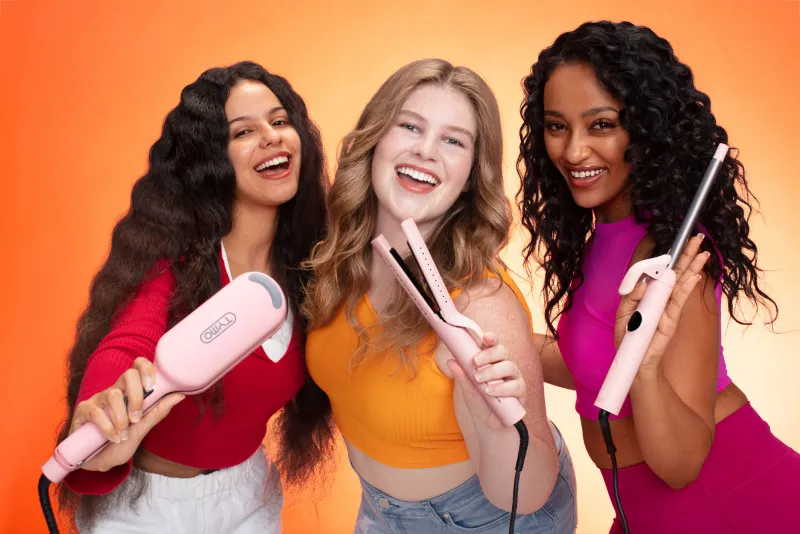
Anyone with thick, curly or coarse hair knows how unforgiving most straightening tools can be. Cheap plates snag, uneven heat causes frizz halfway through a pass and tools that work beautifully on fine hair barely make a dent on denser textures. Finding a straightener that consistently performs on challenging hair types comes down to heat distribution, plate quality and design choices that many budget brands simply skip. TYMO Beauty has built a following specifically among people with hair that other tools struggle to manage.
Why Hair Type Matters When Choosing a Straightener
Hair straighteners are not one-size-fits-all tools. The same device that works well on fine, straight-ish hair can be almost useless on tight curls or thick waves. The key variables are heat range, plate surface area, plate material and how evenly the device maintains temperature during continuous use.
Thick and coarse hair requires higher heat to achieve lasting straightening without repeated passes. Repeated passes over the same section raise the cumulative heat exposure significantly, which increases damage risk. A straightener that reaches and holds the right temperature on the first pass is always preferable. Curly hair also benefits from plates wide enough to handle larger sections efficiently, reducing total styling time and overall heat contact.
Plate material affects how smoothly the tool glides. Titanium plates heat quickly and maintain very consistent temperatures. Ceramic plates distribute heat more evenly across the surface, which reduces hot spots that can scorch individual strands. TYMO Beauty develops tools with specific textures and hair needs in mind, rather than producing general-purpose devices that fall short at the extremes.
The Role of Heat Distribution in Frizz Control
Frizz after straightening is almost always caused by incomplete moisture sealing. When a straightener passes over a section of hair, the heat temporarily flattens the cuticle. If the heat distribution is uneven, with some spots hotter and others cooler, the cuticle seals inconsistently, leaving some strands able to re-absorb atmospheric moisture and puff back up.
Even, consistent heat across the full plate surface is what separates a tool that produces long-lasting results from one that requires touch-up work every few hours. Straighteners that have well-calibrated thermostats and high-quality plate materials hold steady temperatures from edge to edge, which means every strand in a section gets treated the same way.
Humidity resistance after straightening also comes partly from technique, thinner sections, slightly higher heat for resistant hair and a single smooth pass rather than clamping and holding, but it starts with the tool. No amount of technique will compensate for a straightener with inconsistent heat output.
Comb Attachments and Brush Straighteners for Natural Styles
Traditional flat irons are not the only approach to straightening. Heated comb attachments and brush straighteners offer different styling results that work particularly well for certain hair types and desired outcomes. A heated comb can detangle and straighten simultaneously, making it practical for hair that mats or knots easily. Brush straighteners produce a more voluminous result than flat plates, hair ends up straighter but still has body and movement, which some people prefer to the pin-straight look of a traditional iron.
TYMO Beauty offers both approaches, giving people with different goals and hair types more than one way to achieve their desired finish. For someone who wants to reduce curl significantly without going completely straight, a brush tool often produces more natural-looking results with less overall heat exposure.
Temperature Settings and Heat Damage Prevention
Variable heat settings matter more than maximum temperature claims. A tool that only goes up to 450°F isn’t inherently better than one that tops out at 380°F, what matters is whether the available range covers what different hair types actually need and whether the device holds those temperatures accurately.
Fine or chemically treated hair generally needs lower heat, typically in the 300–350°F range. Natural thick or coarse hair often needs 380–420°F to straighten effectively without excessive passes. Using a tool set too low and compensating with multiple passes is often more damaging than a single correct-temperature pass. Getting the temperature right for a specific hair type is one of the most important factors in maintaining hair health over time.
- Always apply heat protectant to damp or dry hair before using any heated styling tool.
- Work in sections no thicker than one inch for consistent results on dense hair.
- Pull the straightener through the section at a steady pace, stopping creates hot spots.
- Allow hair to cool completely before touching or manipulating for best longevity.
- Clean plates regularly to prevent product buildup that causes dragging and uneven heat.
Building a Straightening Routine That Protects Hair Long-Term
Consistent heat styling doesn’t have to mean consistent damage. The tools used, the frequency of styling and the supporting products all contribute to whether hair stays healthy over months and years of regular straightening. The foundation is always a quality tool that doesn’t require excessive passes or excessively high temperatures to produce results.
TYMO Beauty designs their tools with the long-term health of the hair in mind, a practical approach for anyone who styles regularly and wants results they can maintain without deteriorating hair condition over time. Building a routine around quality equipment, appropriate heat settings and good protective habits makes heat styling sustainable rather than something that requires extended recovery periods between sessions.
For people with hair that most standard tools struggle with, finding the right device changes the entire experience of heat styling, from frustrating and time-consuming to consistent and manageable. Exploring what TYMO Beauty offers is a straightforward starting point for anyone ready to replace a tool that isn’t delivering.