There are brands that survive by tradition, and there are brands that survive by adapting. Marks & Spencer sits in a rare middle ground where legacy meets reinvention. Known for decades as a dependable British retailer, it is now reshaping how people think about everyday essentials, from food to fashion to home living.
What makes Marks & Spencer interesting in today’s retail landscape is not just its scale, but its repositioning. Instead of relying purely on heritage, the brand is actively refining its identity through product innovation, improved store experiences, and a sharper focus on quality-led everyday items. It is less about nostalgia and more about staying useful in a fast-changing consumer world.
Across global markets, including expanding partnerships in regions like Southeast Asia, the brand is reinforcing its ambition to stay present in daily life, not just special occasions.
A Legacy Brand Learning to Speak Modern Consumer Language
For many shoppers, Marks & Spencer has long been associated with reliability. But reliability alone is no longer enough in a retail environment shaped by speed, convenience, and digital-first habits.
The brand’s recent evolution shows a clear effort to modernize its tone and offerings. That includes refining product design, refreshing packaging, and making its collections feel more aligned with contemporary lifestyles. Recent industry shifts highlight a broader push toward stronger fashion relevance and improved perception among younger shoppers.
What stands out is the intention to balance two audiences: long-time customers who value consistency, and newer shoppers who expect style-forward simplicity.
In practice, this means more curated ranges, cleaner design language, and an emphasis on wearable, functional everyday pieces that still feel current.
Food as the Quiet Power Behind the Brand’s Identity
While fashion often gets attention, the real strength of Marks & Spencer lies in its food business. It has become a defining pillar of the brand, shaping customer loyalty in a way clothing alone cannot sustain.
The food division focuses heavily on quality, freshness, and ready-to-eat convenience. In a world where time is increasingly scarce, this positioning matters. Shoppers are not just buying groceries, they are buying time saved and decisions simplified.
Recent improvements in product innovation have included expanded ready meals, upgraded staples, and frequent new product introductions designed to keep food offerings dynamic.
Key strengths that stand out include:
- Strong emphasis on ready-to-cook and ready-to-eat meals
- Continuous product refresh cycles to avoid stagnation
- Focus on quality-led ingredients rather than mass discounting
- Clear positioning as a premium everyday food option
This steady food strategy helps anchor the brand even when fashion performance fluctuates.

Fashion That Is Trying to Find Its Modern Identity Again
The fashion side of Marks & Spencer has been undergoing visible transformation. Once seen as conservative, it is now attempting to reposition itself as accessible, stylish, and wearable for a broader demographic.
Rather than chasing fast fashion cycles, the brand is leaning into “everyday style” clothing. This includes improved cuts, more relevant silhouettes, and a stronger focus on wardrobe basics that are easy to mix and match.
Recent shifts in the fashion division show a strategy built around clarity rather than overload. Instead of overwhelming collections, there is a move toward tighter, more focused seasonal drops.
What this evolution is trying to achieve:
- More modern fits without losing comfort
- Improved quality perception across basics
- Better alignment with online shopping behavior
- A clearer identity between casual and smart wear
It is a gradual shift, but one that reflects a deeper understanding of what today’s shoppers actually wear daily, not just what looks good in campaigns.
Store Experiences Are Becoming More Than Just Transactions
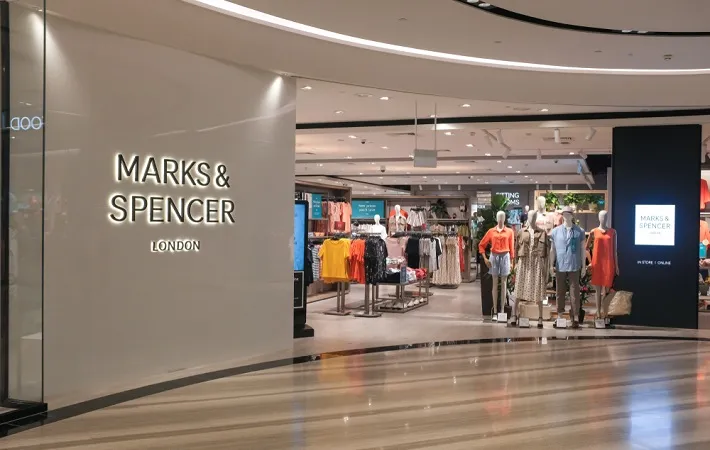
Physical retail still plays a major role in the identity of Marks & Spencer. However, stores are no longer just places to buy products. They are becoming curated experiences.
Newer store concepts increasingly include expanded food halls, coffee counters, and more open layouts that encourage browsing rather than rushing. This aligns with a broader retail trend where physical spaces are designed to feel more social and less transactional.
The goal is to make visiting a store feel like part of a lifestyle routine rather than a chore. A quick grocery run becomes a coffee stop. A clothing visit becomes a combined food-and-shopping experience.
This shift is particularly important in competitive urban retail environments where convenience and experience must coexist.
Why Quality Perception Still Defines the Brand’s Advantage
One of the most consistent strengths of Marks & Spencer is its long-standing association with quality. Even as the retail landscape changes, this perception continues to influence buying decisions.
Unlike purely trend-driven brands, it positions itself around durability, consistency, and trust. That matters more today as consumers become increasingly selective about what they purchase and how long products last.
The value proposition is not just price-based. It is built on confidence that what you buy will perform as expected.
This includes:
- Reliable fabric and material standards in clothing
- Strict quality checks in food sourcing
- Consistency across product ranges
- Strong brand trust built over decades
In an era of disposable consumption, this approach gives the brand a stable foundation.
What Modern Shoppers Should Consider Before Engaging With the Brand
Choosing Marks & Spencer today depends on what a shopper values most.
For some, it is about dependable basics. For others, it is about ready-made convenience or a balanced mix of quality and accessibility. The brand is not positioned as ultra-fast fashion or budget-first retail, but rather something in between.
Before engaging with it, consumers often consider:
- Whether they prioritize durability over trend speed
- If they value food convenience alongside retail shopping
- How important in-store experience is to their routine
- Whether they prefer curated ranges over endless variety
The strength of the brand lies in its consistency rather than extremes. It does not try to be everything for everyone, but it aims to be dependable for many.
A Brand That Is Reinventing Itself Without Losing Its Core
The ongoing evolution of Marks & Spencer is less about dramatic reinvention and more about careful adjustment. It is refining what already works while modernizing what no longer does.
In a retail world where attention spans are short and competition is intense, that kind of steady transformation can be just as powerful as radical change.
What emerges is a brand trying to stay relevant not by abandoning its past, but by reinterpreting it for today’s lifestyle needs. And in many ways, that is what keeps it firmly in the conversation of modern retail: not reinvention for its own sake, but evolution with purpose.