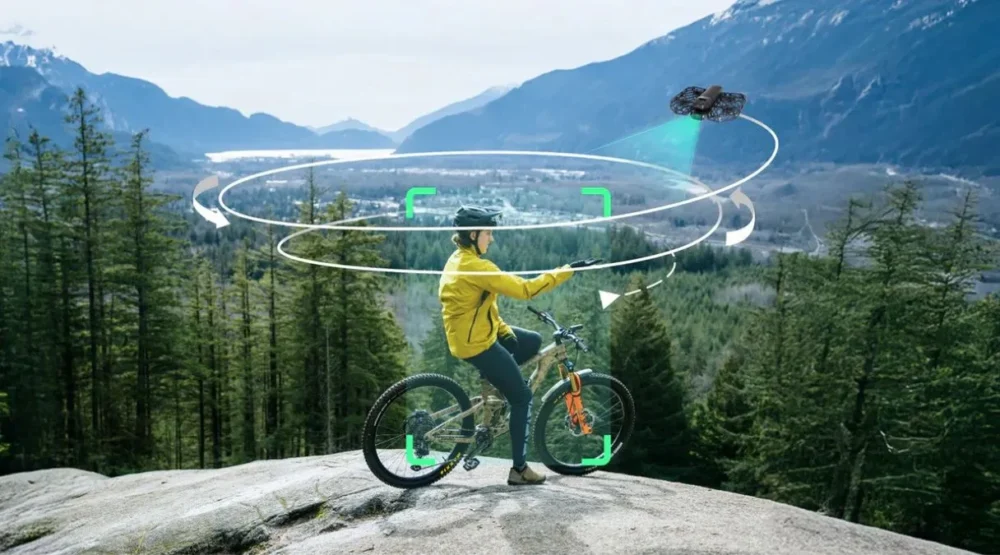
Getting a good aerial shot used to mean hiring a drone operator, learning a complex controller or settling for whatever a camera could capture from the ground. HOVERAir built a different answer to that problem, a palm-sized self-flying camera that takes off, follows its subject and lands without requiring any piloting skill. The result is aerial footage that once belonged to professionals, now accessible to anyone who wants it.
What HOVERAir Makes and Who It’s For
HOVERAir specializes in self-flying cameras, a category distinct from traditional consumer drones. Where a standard drone demands active control, throttle, yaw, pitch, a self-flying camera handles all of that automatically. The user sets a flight mode and the device does the rest. No controller, no steep learning curve, no standing in a field staring at a screen instead of living the moment being recorded.
The target audience is broad. Athletes who want footage of their run, ride or session without a filming partner. Travelers who want cinematic shots without the bulk of a full drone setup. Families who want a flying camera at the beach or park without worrying about registration requirements or complex calibration steps. The product is designed to be picked up and used within minutes of unboxing.
How the Self-Flying Technology Works
The camera launches from the palm of a hand with a single press. Onboard sensors, stabilization systems and pre-programmed flight paths manage altitude, distance and framing in real time. Subject tracking uses computer vision to keep a person centered in the frame even as they move, turn or change direction.
Flight modes are preset and selectable, hover and orbit, follow behind, fly overhead, zoom out reveal and others. Each mode produces a distinct type of shot without requiring the user to manually fly the path. The camera handles transitions between frames, altitude adjustments and smooth landings autonomously. HOVERAir designed the system so that producing footage that looks deliberate and cinematic takes seconds, not sessions of practice.
Video Quality and What to Expect
Self-flying cameras only matter if the footage is worth using. The camera shoots in high resolution with electronic image stabilization that smooths out the micro-vibrations common in compact aerial devices. The stabilization is particularly visible in follow modes, where the camera tracks a moving subject, shakiness that would ruin a clip from a cheaper device becomes absent or nearly invisible.
Dynamic range handles well in outdoor conditions where bright skies and shaded ground would typically cause exposure problems. Color science leans toward natural tones rather than oversaturated processing, which makes footage easier to edit for users who do post-production work. For those who prefer a finished look straight from the camera, the default profile delivers clean, watchable results without adjustment.
Portability and Practical Design Choices
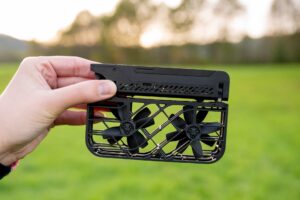
Size matters when something is supposed to be carried everywhere. The device folds flat and fits in a jacket pocket or the front pouch of a backpack. Weight is low enough that it adds almost nothing to a day pack. This is a meaningful difference from traditional drones, which require dedicated carrying cases and add real bulk to any travel setup.
Battery life per charge supports several flight sessions before recharging becomes necessary. The folding design protects the camera and rotors during transport, reducing the chance of damage from casual handling. HOVERAir paid close attention to how the product survives real-world use, dust, movement in bags and repeated folding and unfolding, rather than optimizing only for out-of-box impressions.
Where HOVERAir Fits Compared to Other Aerial Cameras
The comparison that comes up most often is between self-flying cameras and traditional consumer drones. Traditional drones offer more control, longer range and in some cases superior image quality at the top end. But they also require more skill, more gear and more planning. In many urban and crowded environments, flying a traditional drone is restricted or draws significant attention.
Self-flying cameras occupy a space between action cameras on poles and full drone setups, offering something neither delivers well, genuine aerial perspective with no operator required and a form factor that fits in a pocket. For users who want aerial shots as part of how they document their lives, the tradeoff makes sense.
Getting Started and Learning the Flight Modes
Setup time is short. Unfolding the device, connecting to the companion app and selecting a flight mode takes a few minutes. The app provides a live preview and lets users select from available modes, review footage after landing and adjust settings. No memorizing a manual or watching hours of tutorial content before a first successful flight.
Each flight mode has a short in-app description explaining what the resulting shot looks like. New users can experiment with modes one at a time and develop a sense of what each produces. The main flight modes and what they capture include
- Follow mode, tracks the subject from behind, ideal for running, cycling or hiking
- Hover mode, holds position and records from a fixed aerial vantage point
- Orbit mode, circles the subject in a smooth arc for dramatic B-roll footage
- Zoom out reveal, starts close and pulls back, revealing surroundings cinematically
- Overhead mode, flies directly above the subject for a bird’s-eye perspective
More experienced users can stack modes across a session to create varied footage from a single outing. The learning process is progressive rather than gated, footage is usable from the first flight, improving in variety as familiarity grows.
Anyone curious about what aerial footage could look like when flying itself is no longer the barrier will find HOVERAir a well-considered answer to that question.